
Preserving Tomatoes
The Garden Diaries, August 4

August is finally here, and with it, the true start of tomato season. We’ve been harvesting since July, handfuls tossed into salads, a few roasted for soup and pasta sauce but August is when the volume arrives in earnest.
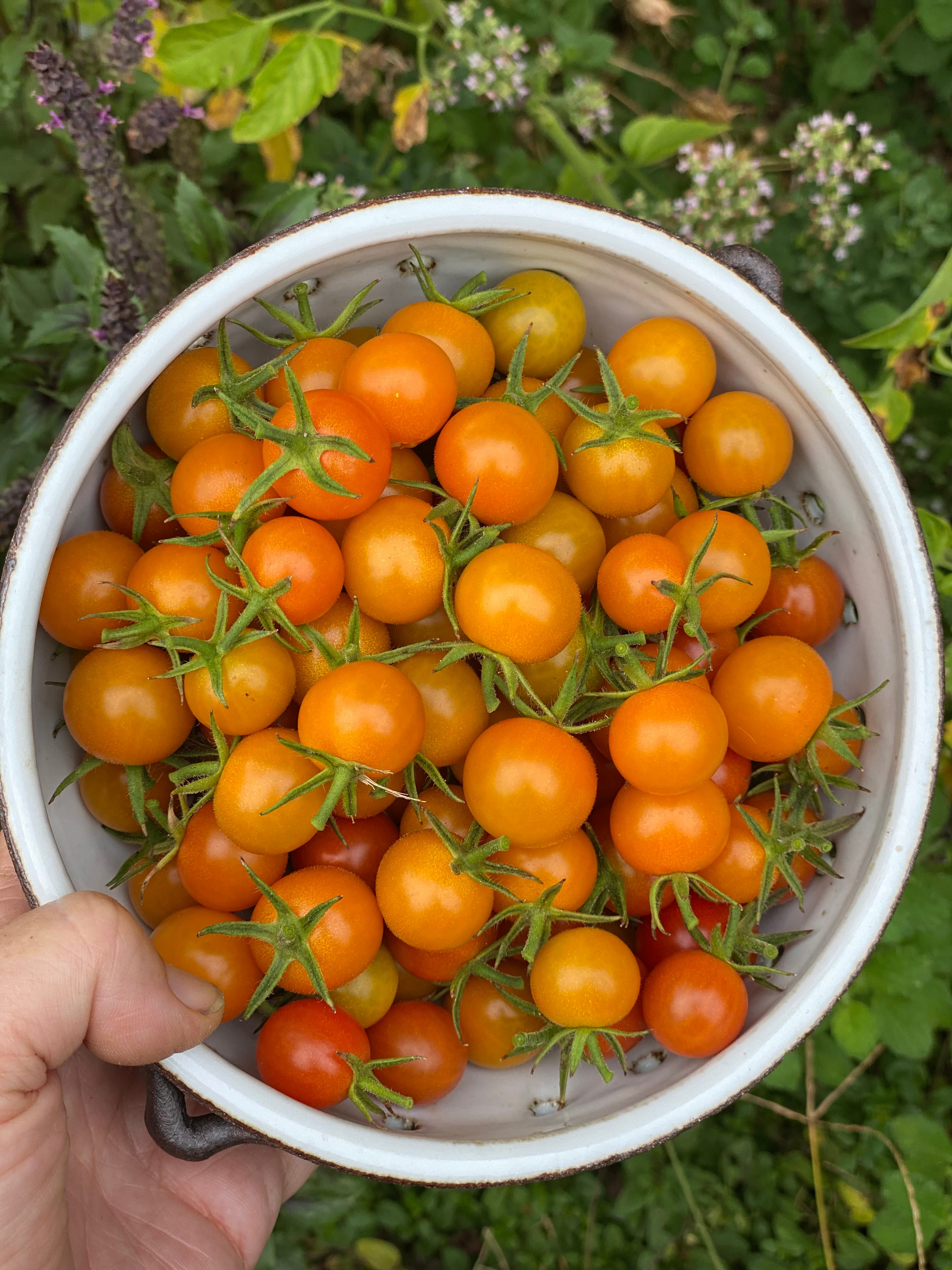
The cherries came first. For weeks it was just a few handfuls at a time, enough for a salad, a snack in the garden, a few to add to my morning eggs. Now I fill the entire harvest basket with them every other evening. ‘Sungold’ is the variety I grow every year, sweet and orange, the fruit splitting open in the heat if you don’t pick it soon enough. This year I’m trialing two new ones alongside it: ‘Rose Quartz’, and a local variety called ‘Sebastopol’, a large red cherry bred not far from here. So far, ‘Rose Quartz’ is the favorite.
The mid-sized tomatoes have caught up now too. ‘Black Zebra’ and ‘Black Prince’ are two favorites I am growing this year. I’m also trying a couple new ones from Uprising Seeds: ‘Afghan’, a pleated yellow-orange variety you can eat in two or three bites, and ‘Sheboygan’, a paste tomato with fruits running four to six ounces, few seeds, and just the right density for sauce and canning. I am also growing the larger Mexican heirloom variety ‘Zapatoc Pleated’.
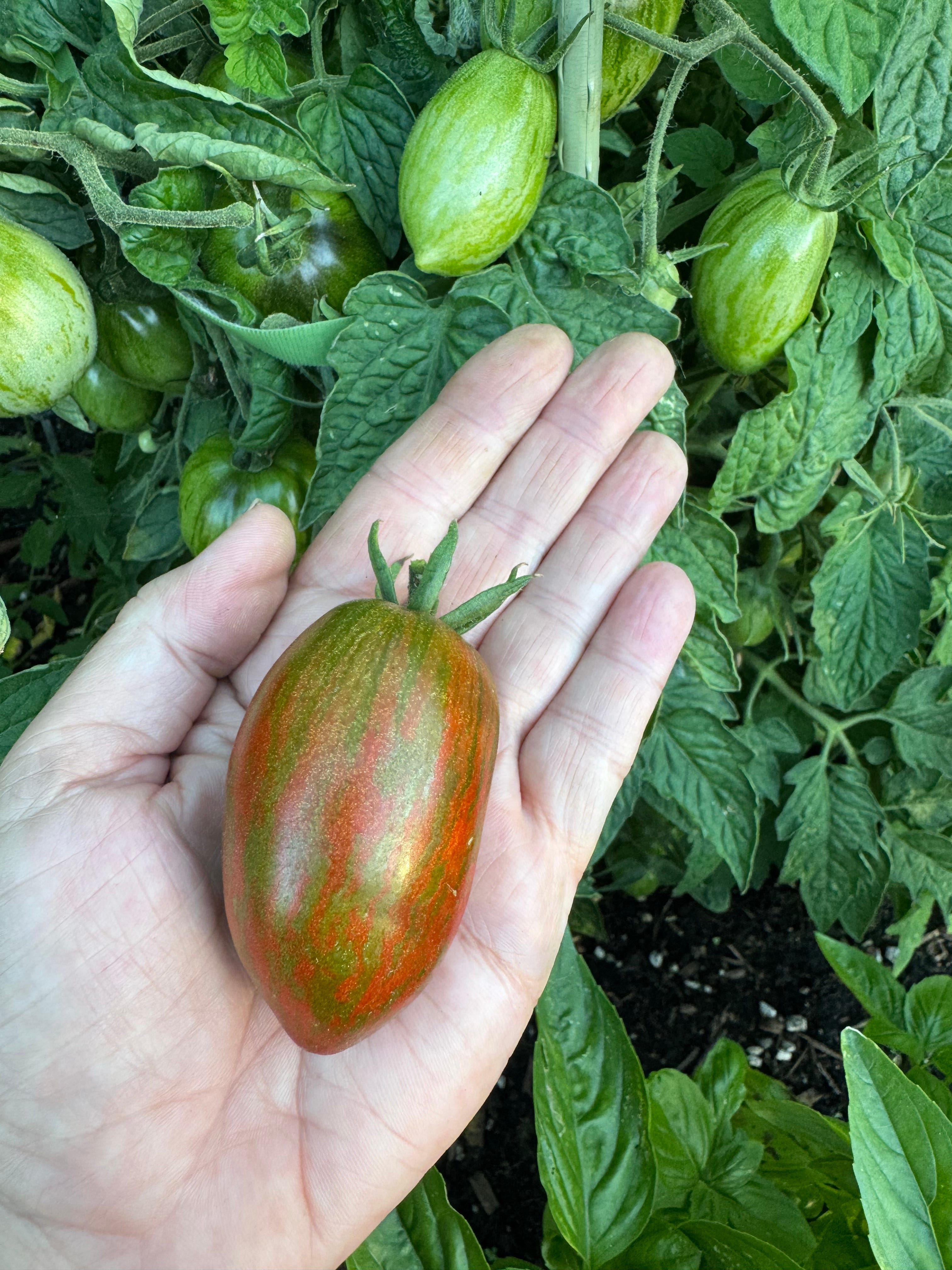
And then the dwarfs. ‘Saucy Mary’ and ‘Audrey’s Love’, both elongated, both striped, both determinate, which means they ripen all at once rather than trickling in over the season. A few fruits at a time, and then suddenly the whole plant is ready. Determinate tomatoes are great for preserving because you get most of the fruit at one time.
Once you can no longer eat enough tomatoes in a week, it’s time to start preserving.
Of everything I grow, three harvests do the most to shape what we eat in winter: garlic, winter squash, and preserved tomatoes. All winter long, I reach for my own jars of canned tomatoes in the pantry, adding them to soups, sauces and stews. For canning, I follow the Ball recipe, a classic, and food safe method. The key is to acidify the tomatoes by adding citric acid or lemon juice to prevent bacterial issues - like botulism. Canning tomatoes is not hard, but the food safety issues can be intimidating. It is easy to avoid as long as you add the acid component and follow the recipe. Once those jars are done, here are a few of my other favorite ways to preserve the harvest, besides making sauce and freezing it.
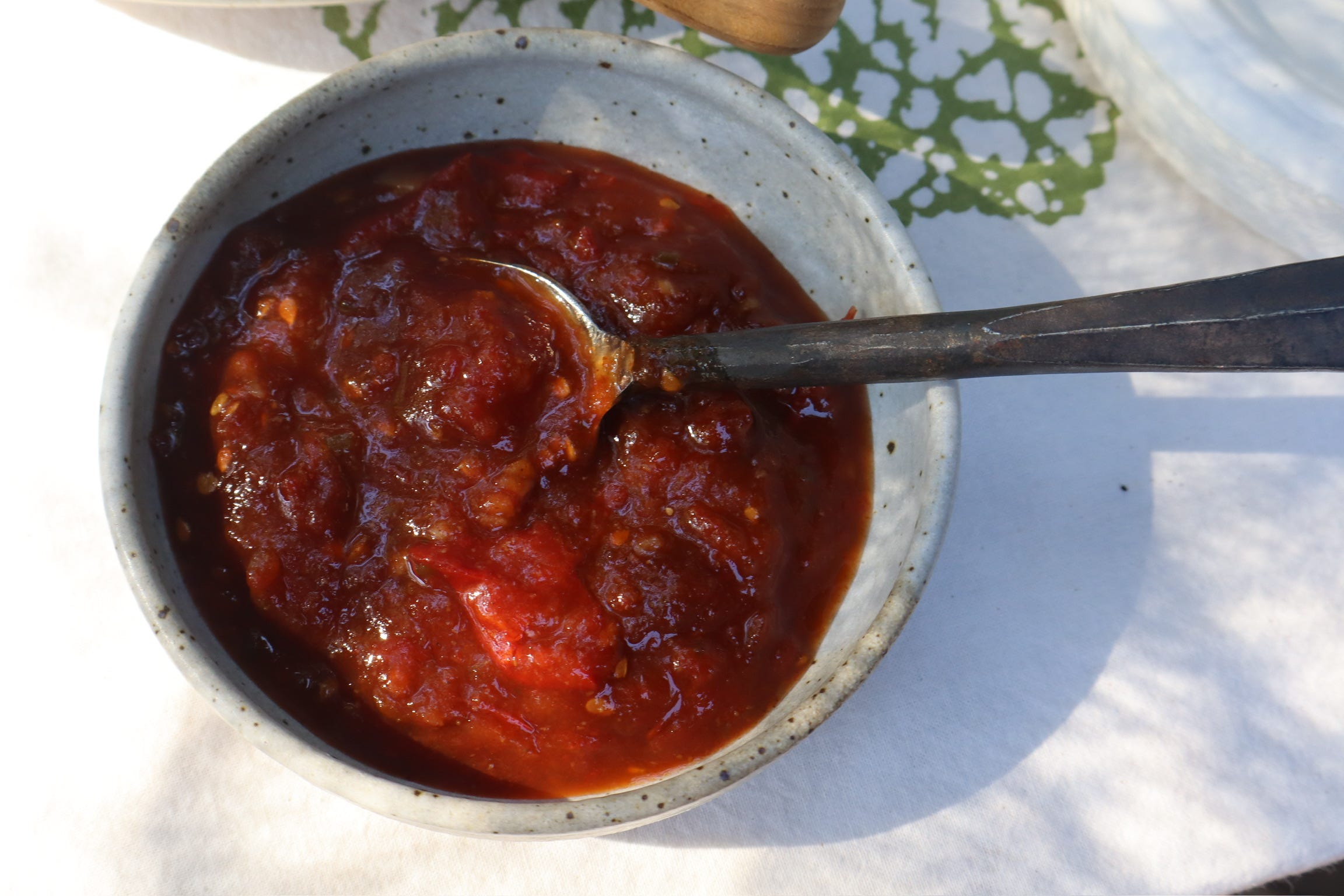
Tomato Jam
This is the recipe I make with whatever ripe tomatoes are piling up, though paste varieties like ‘Sheboygan’ are ideal. The recipe is from Mark Bittman over at the New York Times. Ripe tomatoes are crucial. The sugar gives you the sticky, gooey quality we associate with jam; without it, you’ll end up with something closer to a sauce.
Last year I made multiple batches and froze it in one cup portions. Whenever I wanted a fancy cheese plate, I’d just pull one out to thaw. The jam pairs beautifully with most cheeses.
Total time: 1 hour 30 minutes, plus chilling
Yield: 1 pint
1 ½ pounds ripe tomatoes, cored and coarsely chopped
1 cup sugar
2 tablespoons freshly squeezed lime juice
1 tablespoon fresh grated or minced ginger
1 teaspoon ground cumin
¼ teaspoon ground cinnamon
⅛ teaspoon ground cloves
1 teaspoon salt
1 jalapeño or other pepper, stemmed, seeded and minced, or red pepper flakes
1 teaspoon cayenne
Combine all ingredients in a heavy medium saucepan. Bring to a boil over medium heat, stirring often.
Reduce heat and simmer, stirring occasionally, until the mixture reaches the consistency of thick jam, about 1 hour 15 minutes. Taste and adjust seasoning, then cool and refrigerate. It will keep at least a week in the refrigerator or freeze in 1 cup serving sizes.
Pickled Cherry Tomatoes
This is where the ‘Sungolds’ and ‘Rose Quartz’ earn their keep, small enough to pop in your mouth whole and hold their shape in the brine.
Prep time: 15 minutes
1-2 pints cherry tomatoes
1-2 garlic cloves, peeled
½ teaspoon mustard seeds
1-2 dill sprigs
1 cup apple cider vinegar
1 cup water
1 tablespoon kosher or pickling salt
1 teaspoon sugar
Optional: black peppercorns, dill seed, chili flakes
To a clean jar, add the garlic, mustard seeds, dill sprigs, and any optional add-ins. If using small jars, divide the ingredients equally.
Prick each cherry tomato with a skewer or toothpick, so the brine can penetrate, and add them to the jar.
In a small saucepan over medium heat, combine the vinegar, water, salt, and sugar. Warm until the salt and sugar dissolve.
Carefully pour the hot brine over the tomatoes, keeping them fully submerged. Tap the jar to release air bubbles. Wipe the rim, seal, and let cool to room temperature on the counter. Refrigerate at least 48 hours before serving.
Heirloom Tomato Sorbet
This recipe comes to us from Rosemary Loveall-Sale, the owner of Morningsun Herb Farm. Like a sweet gazpacho for dessert. This is the one I save for the larger tomatoes. I have yet to make a boozy version of this recipe but am planning on experimenting with it soon. Maybe gin or tequila ….
¾ cup sugar
1 pound ripe heirloom tomatoes, roughly chopped
1 ½ tablespoons fresh lemon juice
Flaky sea salt
Extra virgin olive oil, flavored balsamic vinegar, and fresh basil leaves for serving (optional)
In a small saucepan, combine the sugar with 1 ½ cups water and bring to a simmer over low heat, whisking just until the sugar dissolves, about 2 minutes. Remove from heat and let cool, about 5 minutes.
In a blender, purée the tomatoes, lemon juice, a pinch of salt, and the cooled simple syrup until smooth.
Strain through a fine sieve into your ice cream maker, pressing out as much liquid as possible. Discard the remaining pulp.
Freeze according to your ice cream maker’s instructions. Pack into a container and freeze until ready to serve.
Serve with a drizzle of olive oil, balsamic vinegar, and basil.
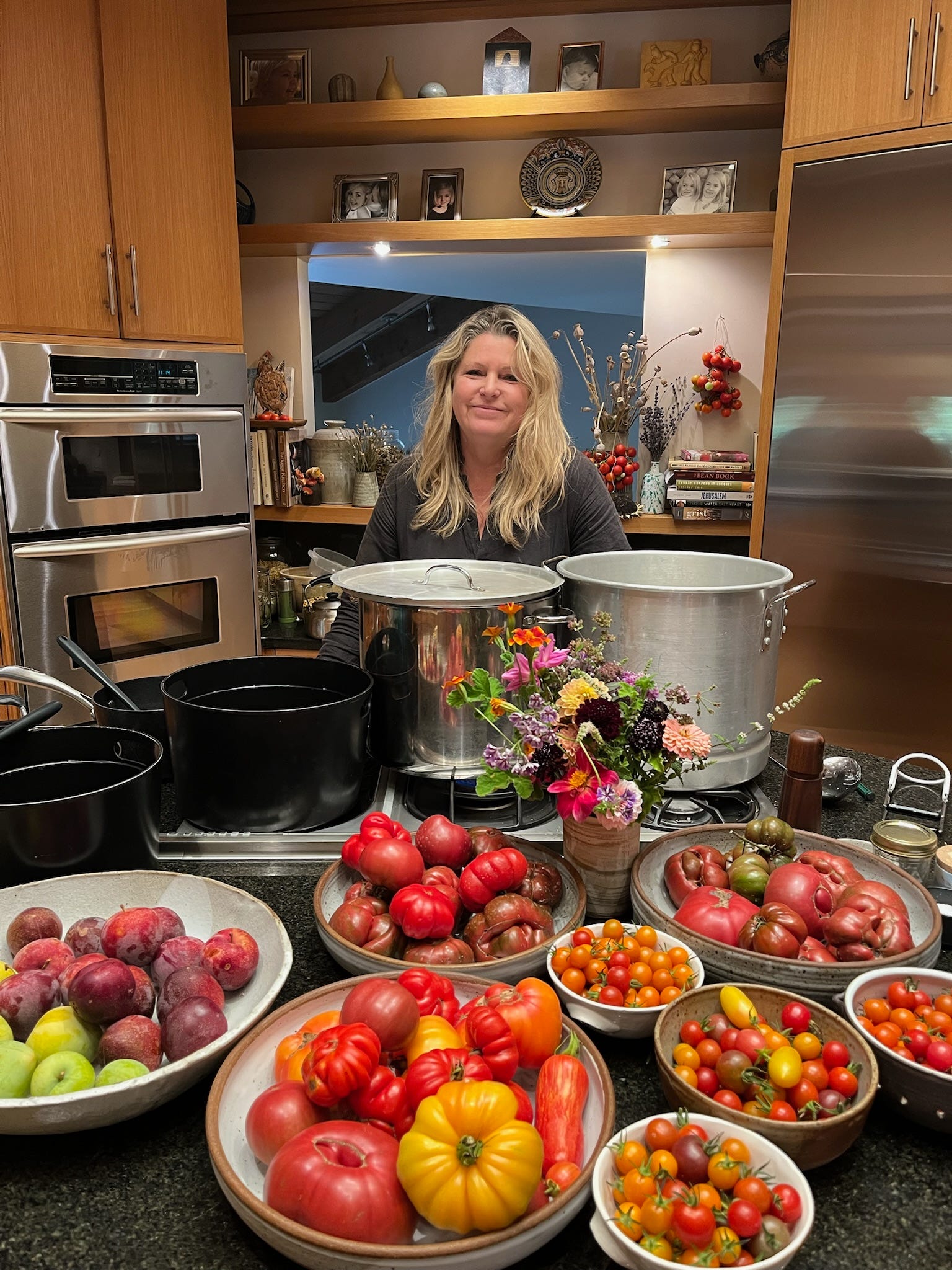
By the end of October, it’s time to take out the plants and cover crop the beds with fava beans. It’s hard to imagine now when the kitchen counter is full of tomatoes. Enjoy tomato season and preserve what you can. You will appreciate the tomatoes long after they are done for the season.
Until next time,
Stefani

Look at those tomatoes!! P.S. I can’t wait to plant fava beans.